All devices and connection methods
Choose another platform or compare the available setup routes.
 Open panel
Connect your iPhone or iPad with its compatible built-in VPN settings or a standard OpenVPN client. These manual options do not require a native Lisar iOS app.
Open the Lisar panel and select an active profile. The connection details belong to that profile: use its server, VPN account and IPsec values for L2TP/IPsec, or its downloaded .ovpn file for OpenVPN. A website sign-in password is not automatically a VPN password.
Start with L2TP/IPsec when your device and network support a suitable connection. OpenVPN is the alternative when they do not. An operating system listing another protocol does not mean that your Lisar profile supports it.
Apple documents L2TP/IPsec support on iOS and iPadOS. Use this path when the profile, operating system and current network are compatible.
If a work or school policy prevents adding a VPN, ask the device administrator. If L2TP is unavailable on your device or unsuitable on the network, use the OpenVPN path below.
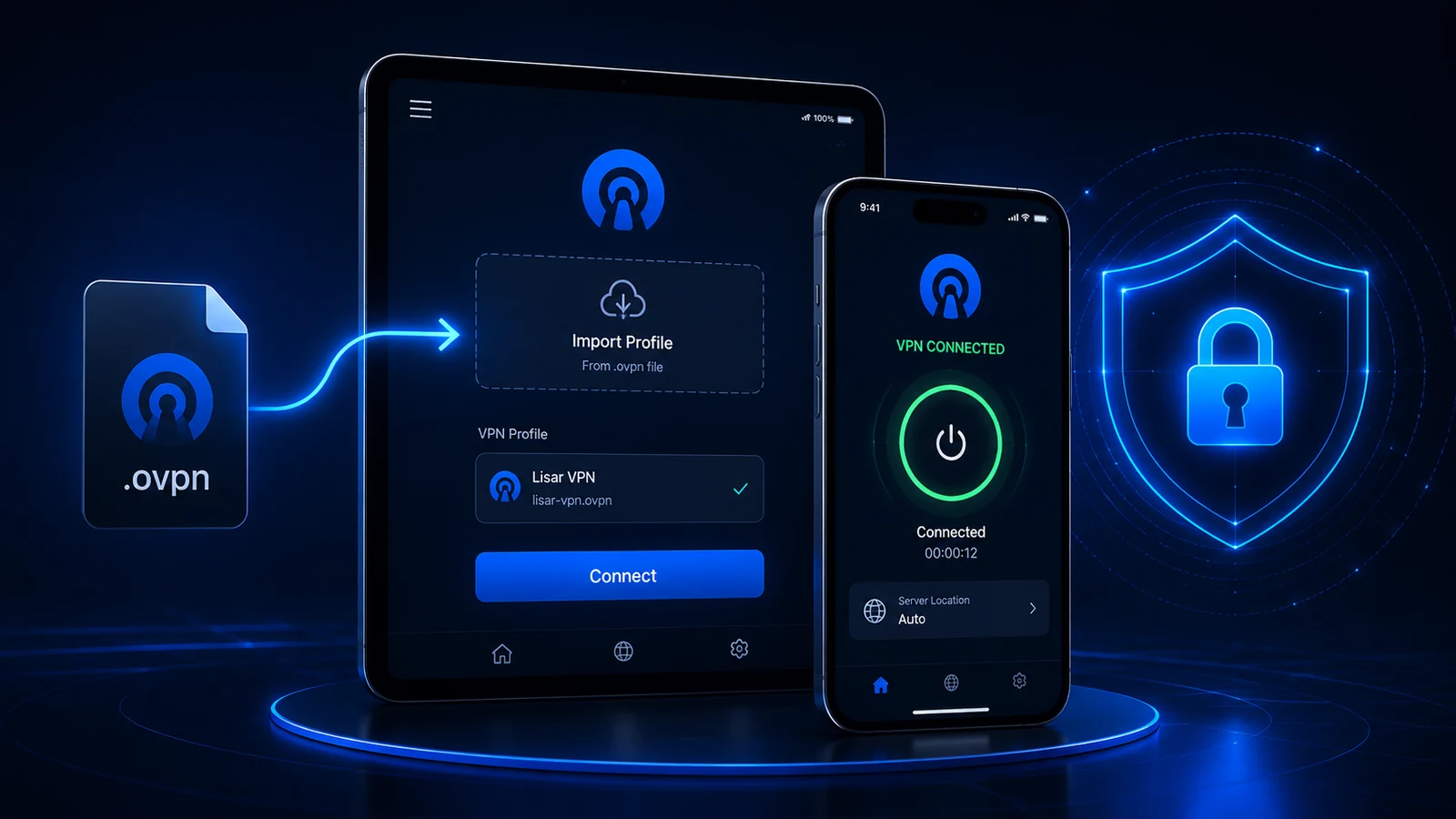
If L2TP/IPsec is unavailable or unsuitable, install OpenVPN Connect for iOS from the official download or store link. The import labels can vary by app version.
.ovpn file from the Lisar panel.Keep the original profile file private. If the client asks for a value that the panel does not provide, contact support with the field name and error message. Do not remove certificate checks or copy connection values from another provider.
The VPN connection is configured for the device, so you do not need a separate Lisar extension for each browser. Proxy settings, split routing or another relay can change the route a browser uses. If Safari shows a different address than expected, review those settings before replacing a working VPN profile.
A VPN status icon confirms a connection state; it does not guarantee that every website will accept the exit address. See browser connection checks.
A saved configuration is not a connected tunnel. Confirm that your VPN client or system settings shows Connected, then open a website. After changing Wi-Fi, waking the device or switching to mobile data, check the status again.
If authentication fails, check the active profile and its connection values. If the VPN connects but browsing fails, check DNS and routing before changing the profile. If only one browser fails, review its proxy, secure DNS and other VPN extensions. Use the troubleshooting checklist for the next checks.
For support, provide your operating system, client version, protocol and a redacted error message. Do not send passwords, shared secrets, private keys or a complete profile in a public message.
Choose another platform or compare the available setup routes.
Check VPN client support before routing a household connection.
Get help with a profile or a device-specific setup problem.