All devices and connection methods
Choose another platform or compare the available setup routes.
 Open panel
Use the Windows VPN settings for a compatible L2TP/IPsec profile, or import your Lisar OpenVPN file into a standard client. Choose the method supported by your computer and network.
Open the Lisar panel and select an active profile. The connection details belong to that profile: use its server, VPN account and IPsec values for L2TP/IPsec, or its downloaded .ovpn file for OpenVPN. A website sign-in password is not automatically a VPN password.
Start with L2TP/IPsec when your device and network support a suitable connection. OpenVPN is the alternative when they do not. An operating system listing another protocol does not mean that your Lisar profile supports it.
Use a supported Windows release and a current client compatible with its processor architecture. These instructions describe standard clients; a Windows VPN setting is not a native Lisar app download.
If the connection is blocked by a device policy or network, use the supported alternative instead of changing registry or firewall settings without a diagnosed reason. Microsoft documents L2TP as a supported Windows VPN connection type.
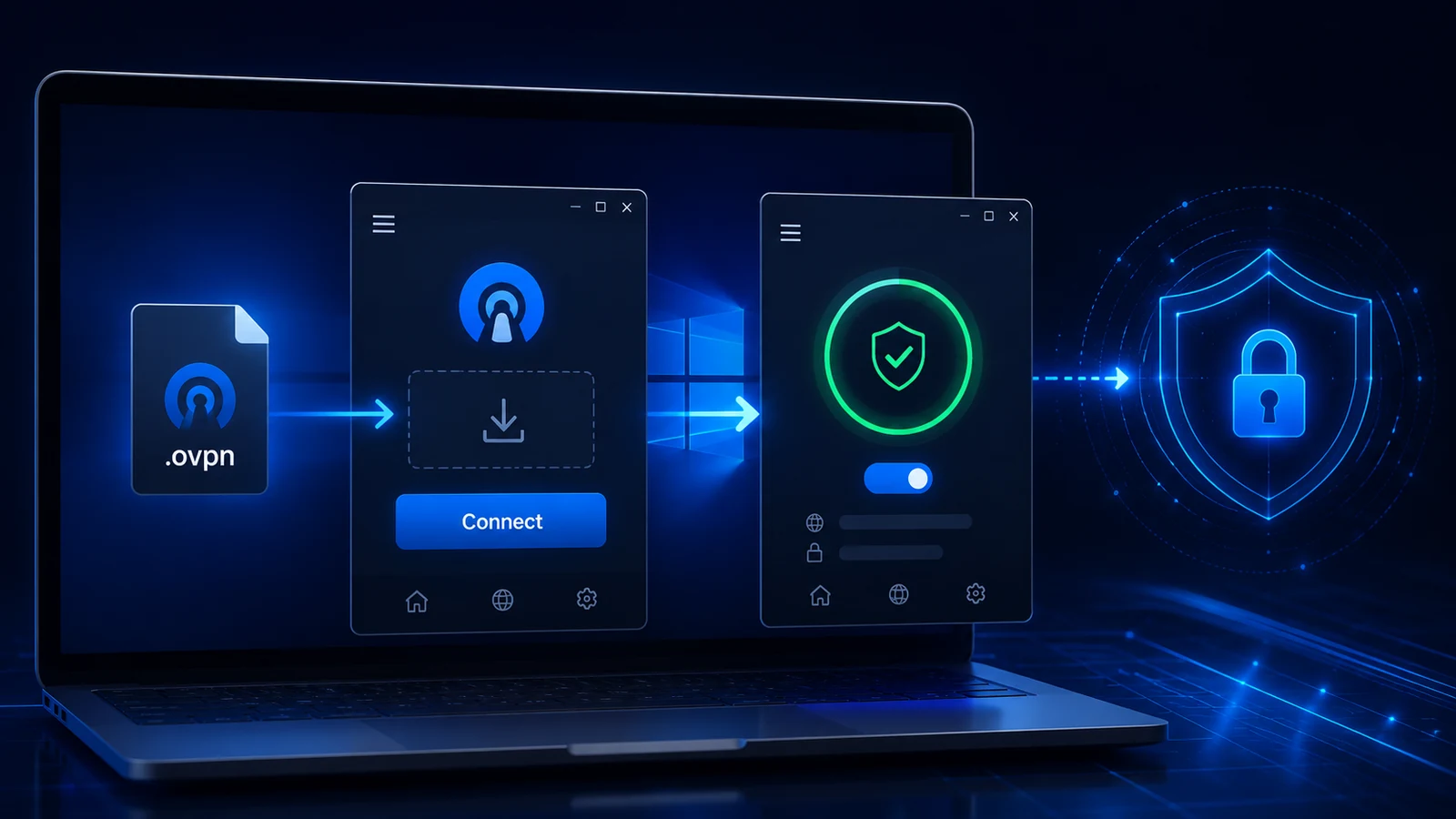
If L2TP/IPsec is unavailable or unsuitable, install OpenVPN Connect for Windows from the official download or store link. Choose the installer for your operating system and processor where offered.
.ovpn file from the Lisar panel.Keep the original profile file private. If the client asks for a value that the panel does not provide, contact support with the field name and error message. Do not remove certificate checks or copy connection values from another provider.
A work VPN, third-party proxy or another VPN client can change the same routes that Lisar uses. Disconnect the conflicting personal VPN before testing; leave managed work settings to your administrator. After connecting, test both name resolution and browsing rather than relying on the saved profile alone.
Chrome, Edge, Firefox and Brave use the network route available to them. Follow the browser guide if only one of them behaves differently.
A saved configuration is not a connected tunnel. Confirm that your VPN client or system settings shows Connected, then open a website. After changing Wi-Fi, waking the device or switching to mobile data, check the status again.
If authentication fails, check the active profile and its connection values. If the VPN connects but browsing fails, check DNS and routing before changing the profile. If only one browser fails, review its proxy, secure DNS and other VPN extensions. Use the troubleshooting checklist for the next checks.
For support, provide your operating system, client version, protocol and a redacted error message. Do not send passwords, shared secrets, private keys or a complete profile in a public message.
OpenVPN Community for Windows includes OpenVPN GUI. Choose its supported installer for your Windows version and processor if you prefer this client to OpenVPN Connect.
Launch OpenVPN GUI, use its import command to add the Lisar .ovpn file, then choose the saved profile and Connect from the notification-area menu. Check its status and log if the connection fails. Follow the official GUI instructions for your version. Connect and GUI are separate applications; run the intended connection in one client at a time to avoid conflicting routes.
Choose another platform or compare the available setup routes.
Check VPN client support before routing a household connection.
Get help with a profile or a device-specific setup problem.