
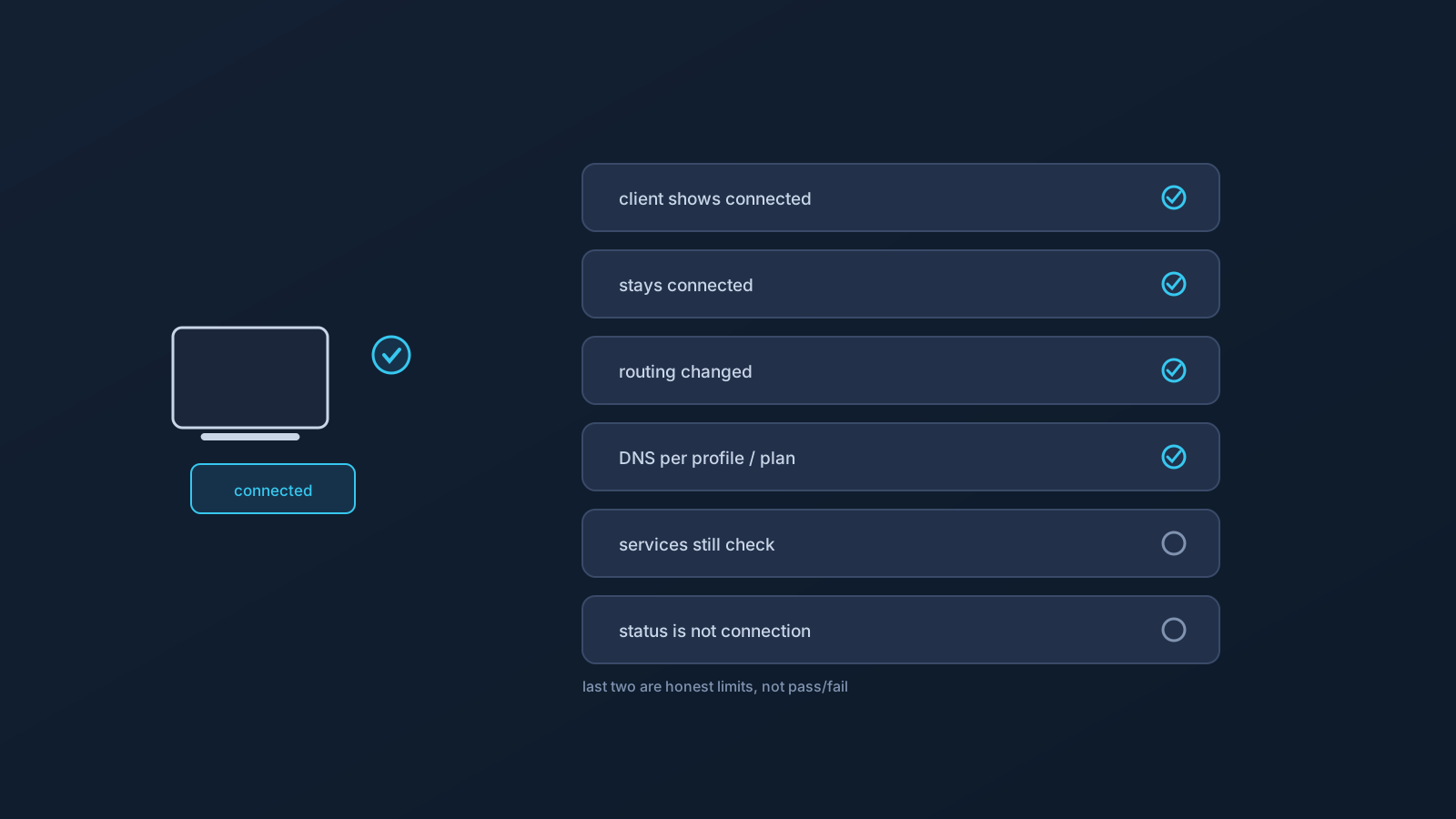
The first time you set up a VPN, "am I actually connected?" is a fair question — the connection is invisible, and a reassuring checklist beats guessing. This is that checklist: a few practical checks for confirming a connection the first time, what each one tells you, and — just as important — what a connection does and doesn't mean.
The honest framing up front: these checks confirm that a VPN connection is established. They aren't a verdict on privacy, security, or how any website will treat you — those are separate matters, and this article is careful to keep them separate.
Check 1: the client says connected
Start with the obvious and often-sufficient check: what does the VPN client itself report? A supported client like OpenVPN Connect shows a clear connection state — connected, disconnected, or in progress. When it shows connected, the client is telling you the connection it was given is up.
That's the primary signal, and for everyday purposes it's usually enough. The remaining checks are about building first-time confidence that the client's report matches reality — helpful the first time, less necessary once you trust the setup.
Check 2: the connection held for a moment
A connection that flickers up and immediately drops isn't really established. So give it a beat: after the client shows connected, does it stay connected through a little ordinary use rather than dropping back right away? A stable "connected" that persists is more meaningful than a momentary one.
If it won't hold, that's a troubleshooting signal rather than a confirmation — the troubleshooting checklist and the import-problems guide cover where to look, usually starting with a fresh profile from your Panel and the network you're on.
Check 3: your network path changed as expected
When a VPN connection is active, your device's traffic is taking the VPN's path rather than going out directly — and that change is observable in a general way. Without getting technical, the idea is that your connection now appears to route through the VPN rather than your local network directly. Many people confirm this simply by noticing that things behaving as "connected through the VPN" line up with the client showing connected.
Keep this check honest, though: it confirms that routing changed, not anything about what that routing guarantees. It's a "the connection is doing what a connection does" check, nothing more.
Check 4: DNS behavior may reflect your profile
Depending on your plan and profile, some name-lookup behavior may reflect your profile's settings while connected — for instance, where a plan includes DNS AdBlock, some unwanted lookups that pass through the profile's DNS path may be reduced. GeoDNS, DNS AdBlock and Custom Exit are available according to plan.
So a first-time observation that DNS behaves a little differently while connected can be expected where those features apply — and its absence isn't alarming either, since these features are plan-dependent and confirmed in your Lisar Panel. This is a "consistent with my profile" check, not a pass/fail one.
What a connection does not confirm
Here's the part worth stating plainly, because first-time confidence can tip into over-reading. A confirmed VPN connection does not mean any website or service will treat you a particular way. Services still perform their own account and security checks — sign-in verification, device signals, and the rest — regardless of your VPN connection, exactly as covered elsewhere in this series. A working connection is not a promise about outcomes on anyone else's systems.
And it isn't a privacy or security guarantee in itself. This checklist confirms that a connection is established and behaving like a connection; it deliberately makes no claim beyond that, because honest confirmation and broad guarantees are different things.
The check people forget: status is not connection
One last first-timer clarification that prevents a lot of confusion: your profile showing active in the Lisar Panel is not the same as your device being connected right now. Panel status describes your profile at the account layer; the client's connection state describes this device, this moment. Both can be true or different independently, and confirming a connection means looking at the client — not inferring it from Panel status.
The first-time checklist, together
- The VPN client shows connected.
- It stays connected through a little ordinary use, not just for an instant.
- Things behave as routing-through-the-VPN, consistent with the client's report.
- DNS behaves in a way consistent with your profile and plan (where applicable).
- You remember that services still run their own checks, and that a connection isn't a privacy or security guarantee.
- You're reading the client for connection state — not inferring it from Panel profile status.
Run through that once the first time, and connection confirmation stops being a mystery. After a few sessions, check one usually suffices — and the honest limits stay true no matter how many times you connect.
Frequently asked questions
How do I know my VPN is actually connected the first time? Start with the client: a supported client like OpenVPN Connect shows a clear connected state. Confirm it holds through a little ordinary use rather than dropping immediately — that stable 'connected' is the primary signal.
Does a connected VPN mean websites will treat me differently? No. Services run their own account and security checks — sign-in verification, device signals, and more — regardless of your VPN connection. A confirmed connection isn't a promise about how any service behaves.
Should DNS behave differently when I'm connected? It may, depending on your plan and profile — for example, where a plan includes DNS AdBlock, some unwanted lookups may be reduced while connected. These features are plan-dependent and confirmed in your Lisar Panel, so their presence or absence is both normal.
Is a confirmed VPN connection a privacy or security guarantee? No — this checklist confirms a connection is established and behaving like one, nothing more. Privacy and security are separate matters, and a connection by itself makes no guarantee about them.
My Panel says active but the client says disconnected — am I connected? No — read the client for connection state. Panel status describes your profile at the account layer; the client's state describes this device right now. Confirming a connection means looking at the client, not the Panel.