
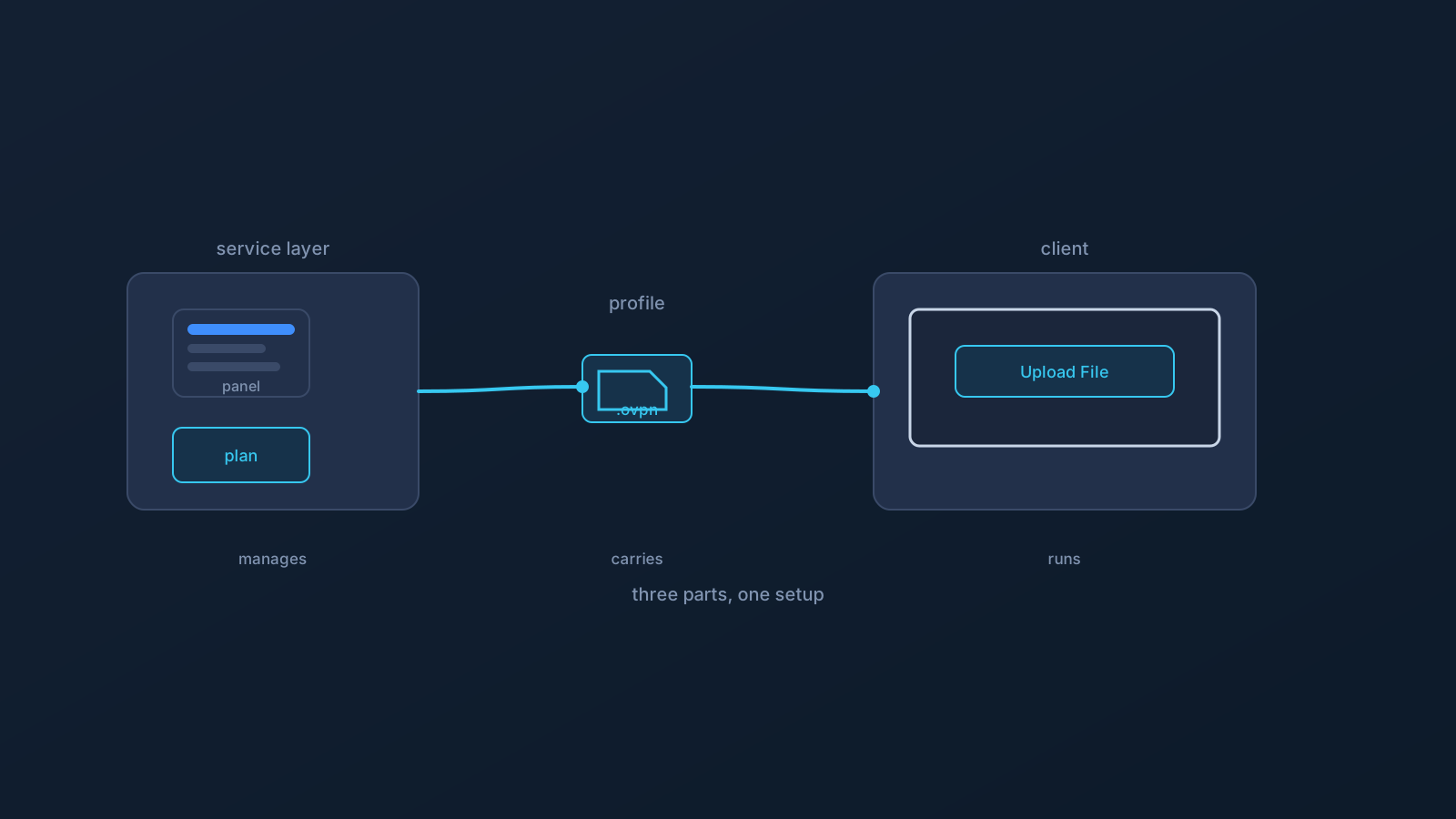
Ask "where is my VPN?" and three honest answers compete: it's the app showing a connect button, it's the file you downloaded during setup, and it's the account you signed up for. All three are right, because a working VPN setup is three parts doing three jobs — and half of everyday VPN confusion comes from asking one part a question that belongs to another.
This article sorts the parts out. Once they're distinct in your head, setup instructions read more clearly, troubleshooting gets faster, and questions route themselves to the right place.
The client: the software that runs the connection
The VPN client is the program on your device that actually establishes and maintains the connection — the thing with the connect control, the status indicator, and the prompts. With Lisar's supported OpenVPN path, that client is OpenVPN Connect: standard software, made by its own maker, used by people with many different providers.
That's worth pausing on, because it says something about Lisar's design: Lisar's part isn't an app at all. You use a standard client where supported, which means the software layer is familiar, documented by its maker, and not something extra to learn per provider. The client's job is mechanical — take a profile, run the connection it describes, report its state — and it does that job the same way regardless of whose profile it's running.
The profile: the instructions the client follows
The client needs to be told what connection to run, and that's the profile's job. With Lisar, the profile arrives as a .ovpn file downloaded from your own profile in the Lisar Panel — a real file carrying the profile-specific setup information for how that particular profile connects. The supported flow is the whole handshake between the parts: download the .ovpn file, open OpenVPN Connect, choose Upload File, import and save the profile, and connect.
Because the file carries setup information tied to your profile, it's sensitive setup material with the standing rules this series repeats on purpose: it comes fresh from your own Panel profile per device, and it never travels through chats, shared folders, email, or anyone else's hands. The profile is also where "which device" questions live — each device imports its own fresh download, following the guide for that device.
The service layer: the account, the Panel, the plan
Behind both sits the part that's actually Lisar: the service layer. Your account, the Lisar Panel where your profiles live and their current setup information is shown, and your plan — which determines what applies to your profiles, including routing features where included. GeoDNS, DNS AdBlock and Custom Exit are available according to plan. The Panel is the source of truth for anything profile-specific: what's current, what your plan includes, what a profile's status is.
The service layer is where management happens — and it's the layer official Lisar support belongs to. Client-software questions have the client maker's documentation; connection-state questions start at the device in front of you; profile and plan questions live in the Panel and with Lisar support.
Three parts, one setup — and better questions
Put together, the model is one sentence: the service layer manages what's yours, the profile carries the instructions, and the client runs them. Every setup step touches the parts in that order — Panel to file to client — and every question you'll ever have about the setup belongs mostly to one of the three.
The payoff is diagnostic. "The button says disconnected" is a client-and-device question first. "Is my profile still active, and what does my plan include?" is a Panel question, answered by looking, not guessing. "Which file should this new tablet use?" is a profile question with a standing answer: a fresh download from your own Panel profile, via the supported flow. Asking each part its own question is most of what experienced users do differently — and it's a habit, not expertise.
What the model keeps honest
The three-part picture also keeps expectations where they belong. The client reports connection state — it doesn't decide what any website or service does with your traffic. The profile carries setup instructions — it isn't an access pass to anything. And the service layer manages plans and profiles — it doesn't override networks you don't control or decisions other services make under their own rules.
Each part does its own job well precisely because none of them pretends to do the others' — or anyone else's. That's the shape of the whole setup, and it's the shape the rest of this series keeps returning to.
Frequently asked questions
Is there a Lisar app I should download? Lisar's part isn't an app — you use a standard VPN client where supported. On the supported OpenVPN path, that client is OpenVPN Connect, and Lisar provides the profile it runs plus the service layer behind it: your account, the Panel, and your plan.
What exactly is the .ovpn file for? It's the profile — the instructions the client follows for how your particular profile connects. It downloads fresh from your own profile in the Lisar Panel, one per device, through the supported flow, and it's treated as sensitive setup material.
Where do I check what my plan includes or whether my profile is active? The Lisar Panel — it's the source of truth for anything profile-specific, including plan features where included. GeoDNS, DNS AdBlock and Custom Exit are available according to plan.
Who do I ask when something isn't working? Route the question to its part: connection state starts at the client and device in front of you; profile and plan questions live in the Panel and with official Lisar support; the client software itself has its maker's documentation.
Does the client decide what websites or services do with my connection? No — the client runs the connection and reports its state. What any service does remains that service's decision under its own rules; no part of the setup changes that.