
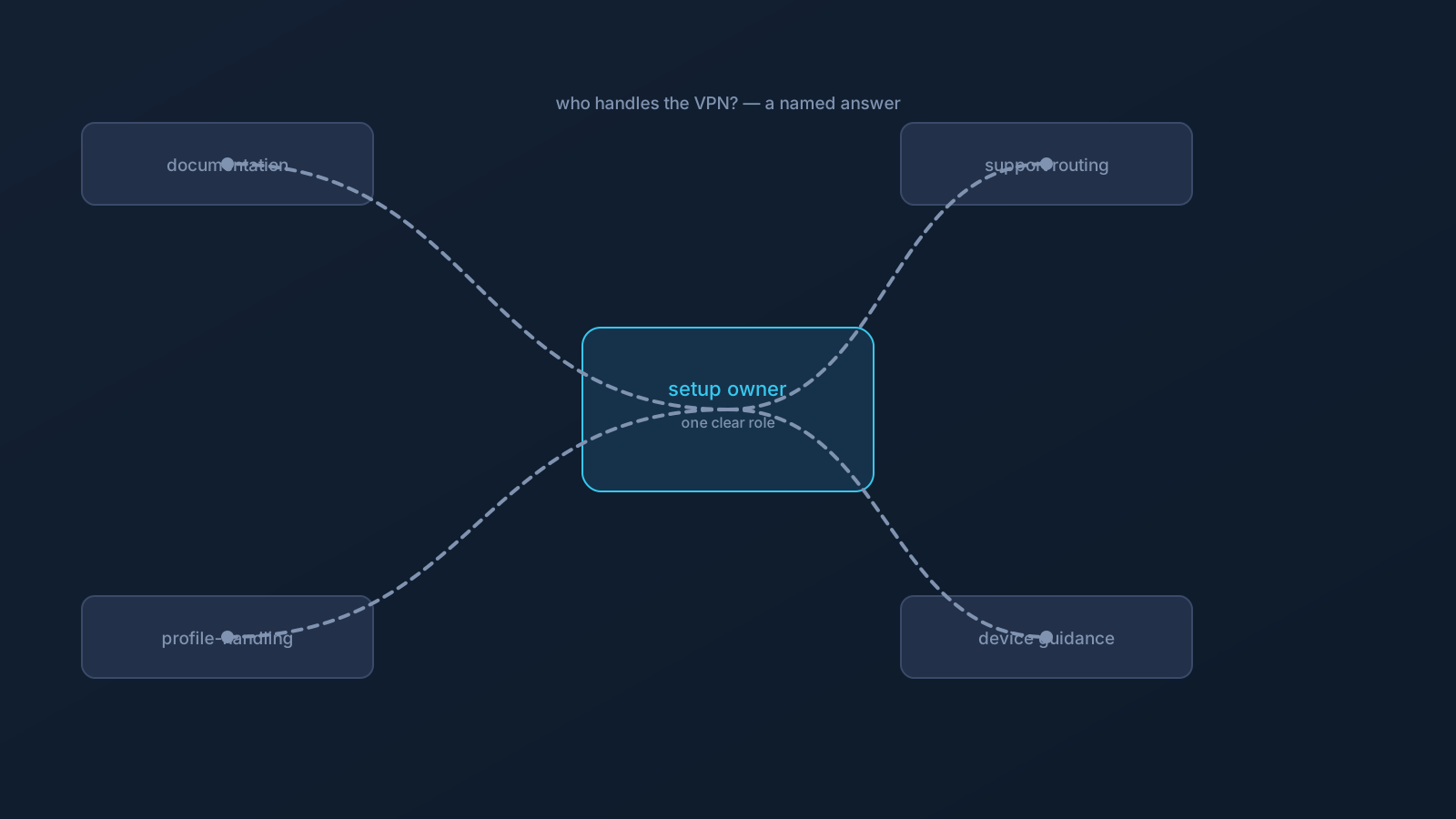
In a small team, "who handles the VPN?" is a question that shouldn't be answered by an awkward silence. When nobody clearly owns VPN setup, the documentation drifts, questions bounce around until someone guesses, and each new hire gets onboarded differently. Assigning one clear owner fixes all of that — not with bureaucracy, but with a single point of responsibility for a handful of practical things.
This article makes the case for a setup owner and describes what the role actually covers. It's deliberately operational and simple: this is about keeping team VPN setup coherent, not about building a security function.
Why an owner beats "everyone and no one"
Shared responsibility for setup usually means no responsibility. Without an owner, the setup document goes stale because updating it is nobody's job, support questions get answered inconsistently because anyone might field them, and practices diverge because there's no one keeping them aligned. A team of five with no owner tends to have five slightly different setups; a team of five with an owner has one practice.
The fix is modest: one person who holds the picture, so the team has a place to point when a setup question comes up. It's a coordination role, not a technical burden — and in a small team it's often a light one.
What the owner actually owns
The role covers four practical things, no more:
The setup documentation. The owner keeps the team's simple setup document current — the approved path, supported devices, profile-handling rules, support contacts, and where status is checked. When practice changes, the owner updates the page; when someone new joins, it's the reference they're handed.
Support routing. The owner is the known answer to "who do I ask?" — not necessarily the person who solves everything, but the one who routes questions to the right lane: the Lisar guides and official support for profile and setup questions, the appropriate person for team-side questions. Half of team confusion is questions going to the wrong place; an owner fixes that.
Profile-handling expectations. The owner holds the line on the habits that keep setup material safe: each person on their own profile from their own account, nothing forwarded or shared, fresh downloads over reused files. Not by policing, but by being the person who set the norm and answers questions about it.
Device and setup guidance. The owner points people to the right setup guide for their device, knows which device categories the team supports, and knows that managed devices follow their policy owner and router-level setups are their own planned path. They don't personally configure everyone's devices — they make sure people reach the right guidance.
What the role is not
Being clear about the boundary keeps the role realistic and adoptable. The setup owner is not the team's security function. This role organizes VPN setup and connectivity coordination — it doesn't own identity and sign-on controls, device management, access rules, or the team's broader security decisions, which live with the team's own functions and owners. A small team assigning a setup owner is organizing its connectivity practice, not appointing a security lead, and the role shouldn't quietly expand into one.
Keeping the role's scope small is what keeps it doable. The moment "owns VPN setup" starts being read as "owns security," it's become something a single coordinating role can't carry — and the fix is to point security questions to their proper owner, not to pile them onto the setup owner.
Who's a good fit
The owner doesn't need to be the most technical person — they need to be reliable and reachable. A good fit is whoever will actually keep the document current, answer or route questions consistently, and hold the profile-handling norms. In many small teams that's an operations-minded person, a team lead, or simply whoever is organized and present. What matters is that the role is named and known, not that it's held by a specialist.
One practical tip: pair the role with the setup document itself, so "owner of the document" and "owner of setup" are the same person. That keeps the responsibility concrete rather than abstract.
The short version
- A small team benefits from one clear owner of VPN setup, because shared ownership tends to mean none.
- The role covers four practical things: the setup documentation, support routing, profile-handling expectations, and device/setup guidance.
- It is explicitly not the team's security function — it organizes connectivity, and security decisions stay with their own owners.
- A good owner is reliable and reachable rather than necessarily technical, and pairing the role with the setup document keeps it concrete.
Name the role, keep it small, and "who handles the VPN?" stops being answered by silence — which is most of what a small team needs.
Frequently asked questions
Does a small team really need someone to own VPN setup? It helps a lot. Without a clear owner, the setup document goes stale, questions get inconsistent answers, and practices drift. One reliable person holding the picture gives the team a place to point — it's a light coordination role, not a technical burden.
What does the VPN setup owner actually do? Four practical things: keep the setup documentation current, be the known answer to 'who do I ask?' and route questions to the right lane, hold the profile-handling expectations (own profiles, nothing shared), and point people to the right device setup guidance.
Does the setup owner need to be the most technical person? No — reliable and reachable matters more than technical. A good fit is whoever will actually keep the document current, answer or route questions consistently, and hold the profile-handling norms. Pairing the role with the setup document keeps it concrete.
Is the setup owner responsible for our security? No — the role organizes VPN setup and connectivity coordination, not the team's security function. Identity and sign-on controls, device management, access rules, and broader security decisions stay with their own owners; the role shouldn't expand into a security lead.
How do we keep the role from becoming a burden? Keep its scope to the four practical things and route security questions to their proper owner rather than piling them on. A small, named, well-understood role is doable; one that quietly grows into 'owns security' isn't.