
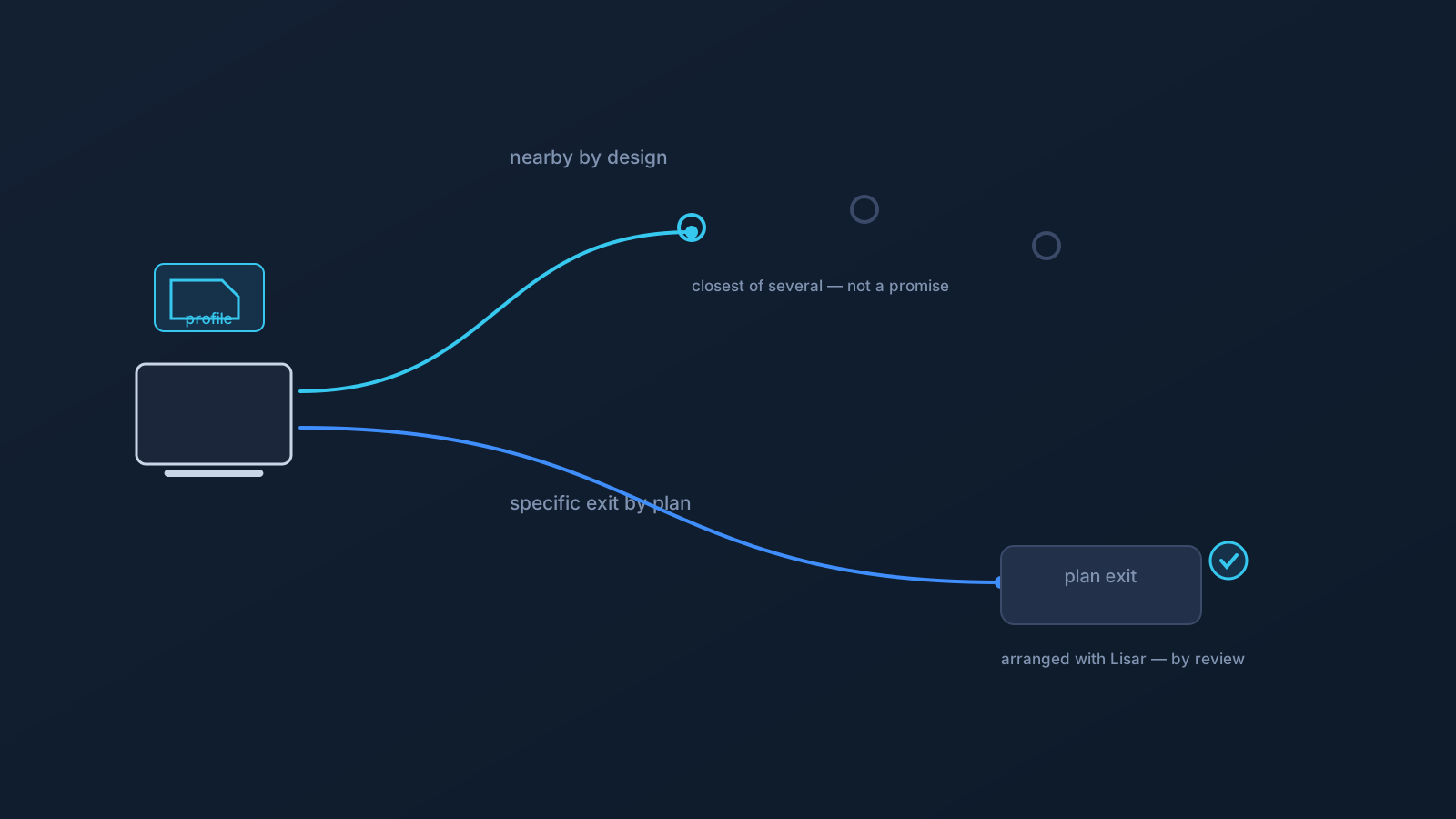
"Which VPN location should I use?" sounds like one question, but it's two, and they have different answers. One question is about the path: how far your traffic travels before it exits, which mostly affects latency. The other is about the exit itself: where your traffic appears to come from, which mostly affects consistency. Confusing the two produces location choices that solve the wrong problem.
This article separates them — and is clear about what's a design goal, what's a plan decision, and what no location choice can promise.
The nearby question: path length and latency
All else equal, a shorter path means less distance for every packet to travel, which is why nearby routing is the sensible default for everyday use: browsing, working, and general connectivity usually feel best when the route doesn't take a detour. Lisar's routing is designed with that in mind — aiming to route connections sensibly based on approximate location, configured policy, what's operationally available, and the network path.
Two honesty notes belong here. First, that's a design goal, not a promise: actual behavior depends on real conditions, and "designed to route nearby" is not "guaranteed nearest." Second, a shorter path is one factor in how a connection feels, not a speed pledge of any kind — networks, devices, and services all contribute, and no location choice makes a connection fast by itself.
The specific-exit question: consistency
Sometimes the point isn't the path's length — it's that traffic should exit the same way, predictably, over time. Teams wanting one set of routing expectations to document and troubleshoot against, businesses whose workflows behave better with a steady network picture, and users who've learned that a stable apparent location reduces avoidable variation with the services they rely on: these are consistency problems, and they're solved at the plan level.
That's what Custom Exit is for, where a plan is eligible: exit behavior defined once, arranged with Lisar, typically after a review — a deliberate plan decision rather than a per-session choice. GeoDNS, DNS AdBlock and Custom Exit are available according to plan. For larger needs, custom plans may include dedicated routing setups, location requirements, and customer-specific review, by request. Consistency is a planning outcome here, which is exactly why it holds.
What neither choice does
A location choice — nearby or specific — changes how your traffic is routed. It does not change what any website, app, or service decides about you. Services apply their own rules and weigh their own signals; an exit location is one signal among many, and no choice of exit obliges any service to behave a particular way. If a service restricts something, a routing decision is not the tool for that — the service's own rules apply as written.
The same realism applies to geography-flavored expectations generally: routing describes your traffic's path, not your identity, your eligibility, or any service's response. Choosing well means choosing for the problems routing actually solves.
How to decide, in practice
Ask which problem you actually have. If the answer is "everyday use, nothing special," the nearby default is doing its job — there's nothing to configure and nothing to optimize; changing things without a specific problem mostly adds variables. If the answer is "we need our exit to be consistent and documented," that's a plan conversation: Custom Exit where eligible, arranged with Lisar, with pricing guidance and review as part of the process. If the answer is "a specific service behaves oddly," start with the service's own signals and support before treating routing as the lever — the apps-and-services article covers why the same connection lands differently in different places.
And if you're unsure what your plan includes, that's a Panel question, not a guess: what applies to a specific profile is shown in the Lisar Panel, which stays the source of truth.
A note on changing things mid-trip or mid-problem
Location decisions are most tempting exactly when they're least wise: mid-trip, mid-outage, or mid-verification with some service. Changing routing in the middle of a problem adds a variable at the moment you most need fewer of them. The steadier pattern — decide deliberately, keep the decision stable, and troubleshoot with the setup you actually have — is the one that keeps both the nearby case and the specific-exit case doing what they're for.
That patience also protects the decision itself. A location choice made once, for a named reason, can be judged later against that reason: did the nearby default serve everyday use, did the plan-level exit deliver the consistency the team documented it for? A choice changed reactively, mid-problem, can't be judged against anything — which is how teams end up with routing nobody remembers the rationale for. Write the reason down when you decide; future troubleshooting will thank you.
Frequently asked questions
Should I always use the nearest VPN server? For everyday use, nearby routing is the sensible default, and Lisar's routing is designed to aim that way based on approximate location, policy, availability, and network path. It's a design goal rather than a guarantee — and path length is one factor in how a connection feels, not a speed promise.
When does a specific exit location make sense? When the problem is consistency: teams or workflows that need traffic exiting the same way, predictably, over time. That's a plan-level decision — Custom Exit where a plan is eligible, arranged with Lisar, typically after a review.
Can I pick an exit location to make a service treat me a certain way? No location choice controls a service's decisions. Services weigh their own signals under their own rules, and an exit location is one input among many. If a service restricts something, its rules apply as written — routing isn't the tool for that.
Do I choose locations per-session with Lisar? Exit behavior with Lisar is a plan property rather than a per-session control: where a plan is eligible, Custom Exit is defined at the plan level and arranged with Lisar. What applies to your specific profile is shown in the Lisar Panel.
Does choosing a nearby route make my connection fast? It removes unnecessary distance, which helps, but connection feel depends on networks, devices, and the services themselves. No routing choice makes a connection fast by itself, and no speed outcome is promised.