
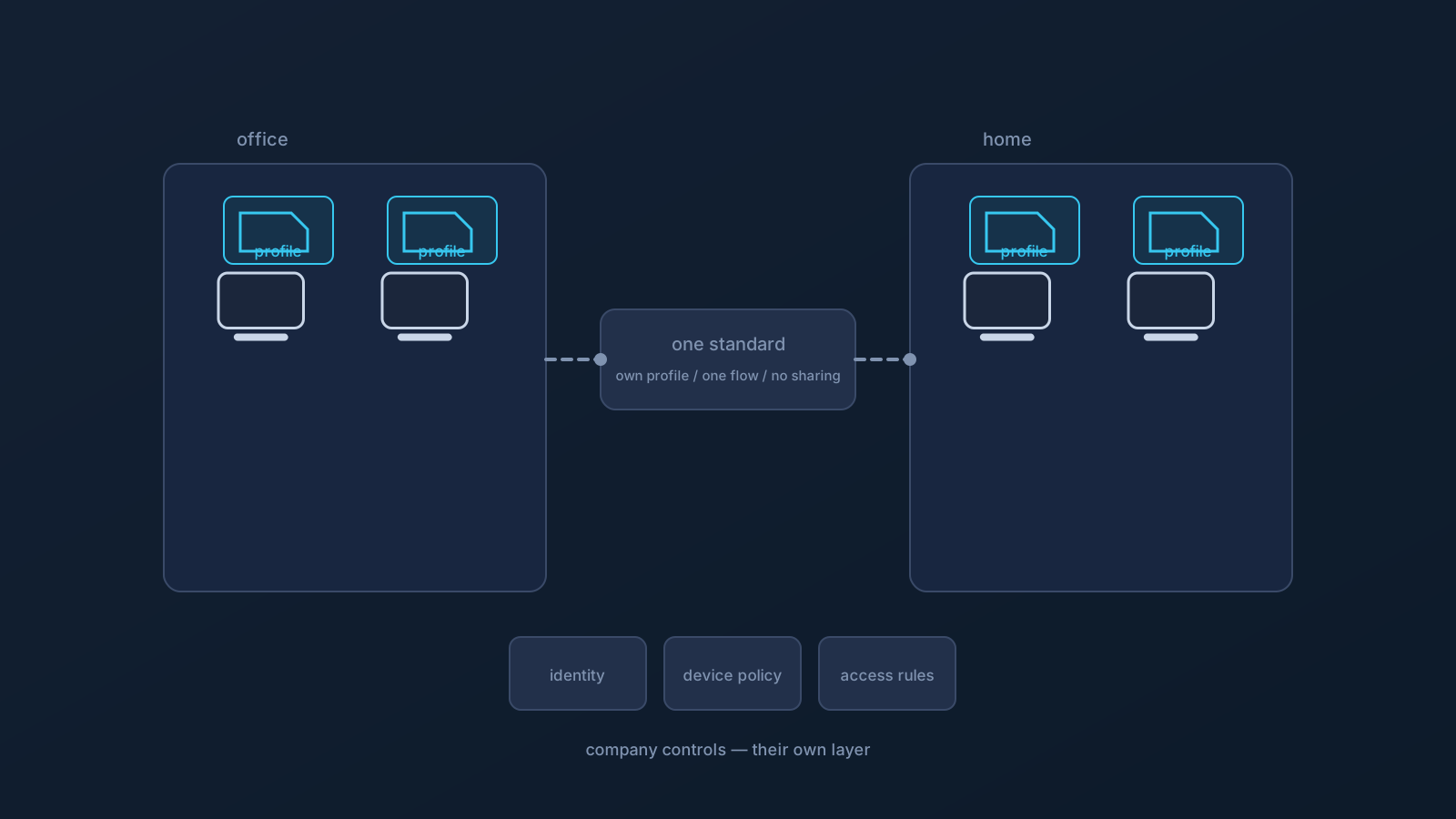
Hybrid work has a way of turning one team into several: the office crowd on office infrastructure, the home crowd on home setups, and everyone carrying a third arrangement for the days in between. Left alone, VPN setup fragments the same way — different methods, different habits, different answers to "how is yours configured?" — until no two members' connections can be reasoned about together.
The fix is one standard applied everywhere people actually work. The boundary that keeps the fix honest: a team VPN standard organizes connectivity, and it replaces nothing about the company's security decisions.
Why hybrid fragments setup
Fragmentation is nobody's plan; it accumulates. The office has its network and maybe its own conventions; home setups get improvised the week hybrid started; the person who joined remotely was onboarded over chat by whoever was free. Each arrangement works locally, and collectively they make every cross-team question harder: troubleshooting can't generalize, onboarding has no single script, and "our routing" means five different things.
Hybrid teams feel this more than fully co-located or fully remote ones precisely because both worlds are in play at once — which is why the standard has to be location-independent.
One standard, everywhere people work
The location-independent standard is the same one this series recommends everywhere, applied without office/home exceptions. Every member sets up from their own profile in the team's Lisar Panel, the supported way: download the .ovpn file, open OpenVPN Connect, choose Upload File, import and save the profile, and connect. The Panel is the source of truth for anything profile-specific, at a desk or a kitchen table. And nothing setup-related — profile files, credentials, profile details — moves between people through chat, email, or shared folders, ever. One profile per member, one flow, one rule about sharing: that's the whole standard, and it fits in a paragraph precisely so it survives contact with real weeks.
Routing consistency rides on the plan rather than on location. Where the team's plan is eligible, exit behavior is a plan property — defined once, arranged with Lisar, typically after a review — so members inherit the same routing expectations whether they connected from the office or a home network. GeoDNS, DNS AdBlock and Custom Exit are available according to plan.
Office days, home days, and the days between
The standard earns its keep on transitions. Office-to-home needs no reconfiguration ritual when the setup never depended on the office: same profile, same device, different network underneath. Home-to-café is the traveler's case in miniature — the setup stays fixed while the network varies, and networks the team doesn't control get the usual realism: no network is guaranteed to support every setup, so members should know the fallback rather than improvise changes.
Managed devices keep their own layer on every one of those days. A company-managed laptop follows its device policy at the office, at home, and everywhere between — what installs, which profiles load, which settings change are the policy owner's calls, and the team's VPN standard operates inside those calls, never around them.
What the standard deliberately does not do
Here is the boundary, stated plainly because hybrid setups tempt teams to blur it. A consistent VPN standard organizes how members connect. It does not replace the company's identity and sign-on controls, its device management and device policy, its device security tooling, its network access rules, its compliance processes, or any internal security process the company runs. Access to company systems remains governed by the company's own controls — a working connection grants nothing those controls don't grant.
Hybrid work often arrives alongside pressure to "sort out security," and a VPN standard is a tempting thing to point at. Resist the pointing: it's one connectivity layer, and the company's security decisions remain the company's, made through its own functions. Teams that keep that boundary get a standard they can trust precisely because it isn't pretending to be more.
Making it stick
Adoption is mostly onboarding plus repetition. New members get the standard on day one — own profile, device's setup guide, the no-sharing rule, and who answers questions. Existing members converge the next time each setup gets touched, rather than through a disruptive migration week. The one-paragraph standard goes wherever the team keeps its working agreements, and the support path (Panel, setup guides, official support for the Lisar side; IT for the company-controls side) is written next to it.
A hybrid team that does this much has what it actually needed: every member reachable by the same mental model, wherever they sat down today.
Frequently asked questions
What should a hybrid team standardize about VPN setup? Three things: every member on their own profile from the team's Lisar Panel, set up the supported way; the Panel as the source of truth for anything profile-specific; and nothing setup-related shared between people. The standard is deliberately location-independent.
How do we keep routing consistent between office and home? Through the plan, not the location. Where the team's plan is eligible, exit behavior is defined once at the plan level — arranged with Lisar, typically after a review — so members inherit the same expectations from any network.
Does a team VPN standard cover our security needs for hybrid work? No, and it shouldn't be asked to. It organizes connectivity; identity and sign-on controls, device management, device security tooling, access rules, and compliance processes remain the company's own layers, run by its own functions.
What changes on company-managed laptops? Nothing changes about who decides: device policy applies at the office, at home, and everywhere between. The policy owner's rules define what setup is possible, and the team standard operates inside them.
How do we roll the standard out without disrupting everyone? Onboard new members with it from day one and converge existing members as setups get touched. The standard fits in a paragraph — keep it with the team's working agreements alongside the support paths for the Lisar side and the company side.