
You connect through your VPN, open a familiar service, and get asked to verify it's really you. It's natural to read that prompt as the VPN causing trouble — but that reading gets the mechanics backwards. Verification prompts are a normal part of how services protect accounts, they're triggered by whole pictures rather than single facts, and no VPN setup switches them off — nor should one be expected to.
Here's what's actually happening when a check appears, and where consistent setup genuinely helps.
Verification is protection working, not something breaking
Services face a hard problem: telling a legitimate owner in an unusual situation apart from someone who isn't the owner at all, using only signals. Their answer is the verification prompt — a small, recoverable check that errs on the side of caution and offers an immediate path back to normal. Seen that way, an occasional prompt is the system doing its job with imperfect information, not evidence that anything on your side is broken.
That reframe matters practically, because it points at the productive response: complete the check calmly through the service's own steps. The prompt is the path back, not an obstacle in front of it.
The signals services may weigh
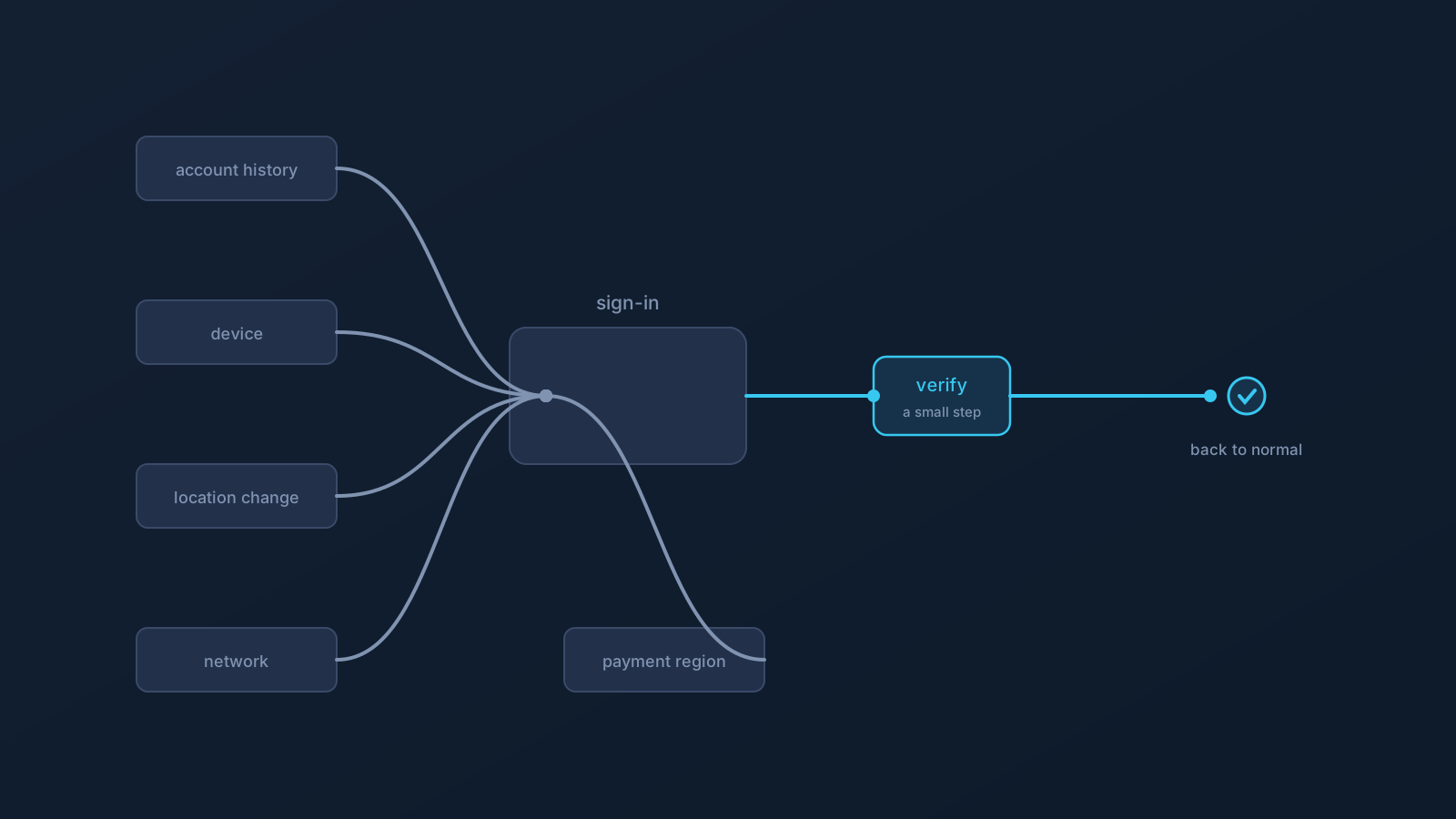
Depending on the service, a sign-in evaluation can draw on many inputs: the account's history and age, how consistent its sign-in locations have been, device and session familiarity, changes in apparent location, how the network itself appears to the service, payment or billing region, the service's own security policies, and whether the login behavior looks usual for that account. No two services weigh these the same way, and most say little about how they do it.
A VPN touches exactly one of those inputs — the network path and its apparent location. Everything else in the picture is account-side, device-side, or policy-side. That's why prompts can appear with or without a VPN, and why the same connection can pass quietly on one service and draw a check on another.
Why a prompt can follow a network change
Within that picture, a change in apparent location is one legitimately interesting signal: accounts that usually sign in from one place and suddenly appear somewhere else look, to a cautious system, like they might be worth a second glance. Travel does this. New networks do this. Switching VPN setups or connecting through different routes at different times can do it too — not because anything is wrong, but because variation is the thing caution notices.
Which is where the honest version of "the VPN caused it" lives: not that a VPN triggers checks, but that avoidable variation in your network picture can contribute to a system's uncertainty, alongside everything else it sees.
What consistent setup helps with — and what it doesn't
The part of the picture you control is your own variation. A consistent VPN setup — your own profile from the Lisar Panel, set up the supported way (download the .ovpn file, open OpenVPN Connect, choose Upload File, import and save the profile, and connect), used steadily rather than switched around — gives services a steadier network picture of you for ordinary, legitimate use. Where a plan includes routing features, they apply as plan properties. GeoDNS, DNS AdBlock and Custom Exit are available according to plan.
What consistency is not is a way around account security, and it shouldn't be wanted as one. Verification exists to protect the account — yours included — and the goal of a steady setup is fewer unnecessary question marks, not fewer protections. A service that never checked anything would be a worse home for your account, not a better one.
When a prompt appears anyway
Sometimes a check arrives despite a perfectly steady setup, because the rest of the picture moved: a new device, an unusual hour, a payment change, a policy tightening on the service's side. The response is the same short list. Complete the service's own verification steps rather than retrying around them. Keep the details services weigh — billing and contact information especially — current. Make sure your verification methods work where you actually are, particularly before travel. And if prompts persist or something seems stuck, that service's own support channel is the path that can actually resolve it.
Prompts handled this way tend to taper: accounts with steady pictures and completed checks accumulate exactly the history that makes future caution less necessary.
The one-paragraph version
Verification prompts are services protecting accounts with imperfect information; they weigh whole pictures in which your network is one signal among many. Keep your own side steady — one profile, supported setup, current account details — complete checks through the service's own process, and let the steadiness compound. That's the whole playbook, and every part of it is yours to do.
Frequently asked questions
Why am I being asked to verify my account when I use a VPN? Because the service is evaluating a whole picture — account history, device familiarity, location changes, network appearance, payment region, its own policies — and erring on caution's side. The network is one signal among many; prompts can appear with or without a VPN.
Will a consistent VPN setup stop verification prompts? It reduces avoidable variation in your network picture, which removes one source of unnecessary question marks. It doesn't and shouldn't switch protection off — checks can still follow new devices, unusual patterns, or service-side policies.
Is a verification prompt a sign my VPN is misconfigured? Usually not. Prompts are how services handle uncertainty, and most of what they weigh is account- and device-side. If your setup is your own profile, set up the supported way and used steadily, the prompt is likely about the broader picture.
What's the right way to handle a sign-in check? Complete the service's own steps calmly rather than retrying around them, keep billing and contact details current, and confirm your verification methods work where you are. Persistent issues belong with that service's support channel.
Can Lisar make services skip their sign-in checks? No — and a setup that promised that would be promising to weaken your account's protection. Lisar's role is steady, supported connection setup; each service's checks remain its own, applied under its own policies.