
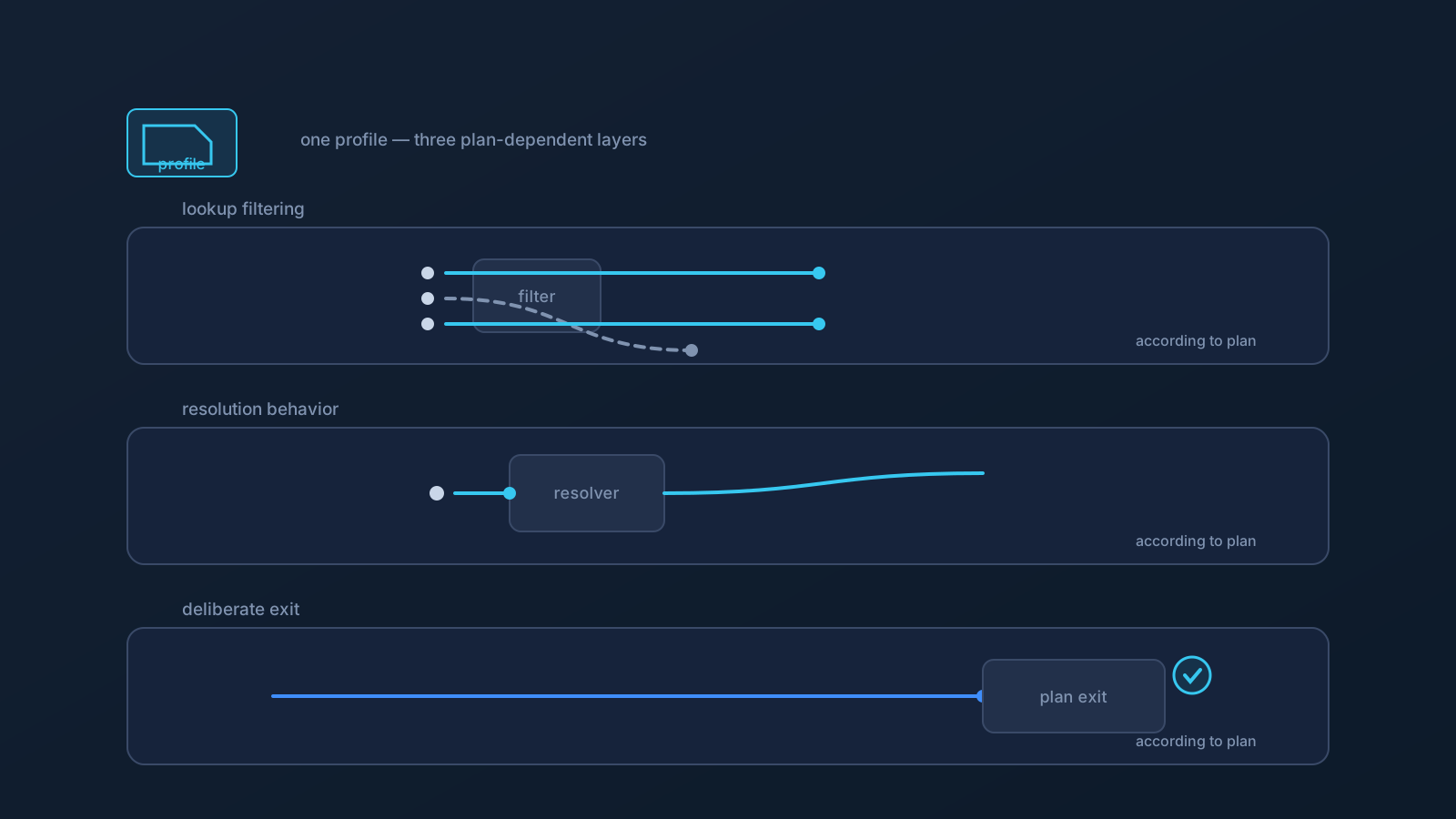
Lisar's plan pages mention three features in one breath — DNS AdBlock, GeoDNS, and Custom Exit — and it's natural to picture them as one bundled thing that switches on together. They aren't. They're three distinct layers doing three distinct jobs, they apply independently according to plan, and understanding them separately is what makes their combination make sense.
Here's each layer on its own terms, then how they coexist — with the standing rule stated up front: GeoDNS, DNS AdBlock and Custom Exit are available according to plan. Which of them applies to a given profile is a plan fact, checked in the Lisar Panel rather than assumed.
Layer one: DNS AdBlock filters some lookups
Every connection to a named service starts with a DNS lookup, and DNS AdBlock — where a plan includes it — works at exactly that step, reducing some unwanted DNS lookups that pass through the profile's DNS path. A lookup the filter treats as unwanted can be declined before any content loads from that domain.
Its job is tidiness at the lookup layer, and its boundaries follow from the layer: it acts on domains, not inside pages, so it reduces some domain-based lookups rather than removing every unwanted element — and it's a comfort feature, not a substitute for device security practices. The DNS filtering articles cover those boundaries in depth; here the point is simply which job this layer does: filtering.
Layer two: GeoDNS shapes DNS-based routing
GeoDNS — where available — lives at the same DNS step but does a different job: instead of declining lookups, it helps shape how DNS-based routing decisions are made, with the aim of resolving connections sensibly based on approximate location, configured policy, what's operationally available, and the network path.
Two boundaries keep this layer honest. It's a design goal rather than a promise — actual behavior depends on real conditions. And it's DNS behavior, not a location switch: shaping how lookups resolve is a different thing from where traffic exits or how any service treats you, which is why the GeoDNS articles insist on the distinction. This layer's job: resolution behavior.
Layer three: Custom Exit sets a deliberate exit
Custom Exit — where a plan is eligible — operates after resolution entirely: it concerns where the connection's traffic exits toward the wider internet. It's a plan-level decision, defined once and arranged with Lisar, typically after a review, rather than a per-session control — which is exactly why teams use it for consistency: one set of exit expectations that every member on the plan inherits.
Its boundary is the series' most repeated one: an exit choice changes how traffic is routed, not what any website, app, or service decides. Services apply their own rules regardless of exit. This layer's job: a deliberate, consistent exit.
How the layers fit together
Put the three jobs side by side and the architecture is clean: filtering happens at the lookup (some lookups declined), resolution behavior shapes how the remaining lookups are answered (aimed sensibly, by design), and the exit determines where traffic ultimately leaves (deliberately, where a plan sets one). They coexist because they never compete — each acts at its own stage, and none changes what the others do.
Three practical consequences follow. First, they're independently plan-dependent: a profile might have any, all, or none of them, and combinations follow the plan rather than a bundle — the Panel is where a profile's actual facts live. Second, they don't substitute for each other: no amount of lookup filtering sets an exit, and no exit choice filters a lookup. Third, their limits don't stack away: the combination is three bounded layers working at three stages, not a package that adds up to guarantees none of them makes alone — no access outcome, no region outcome, no completeness.
Choosing what you actually need
The layer framing turns "which features do I want" into three concrete questions. Do you want some unwanted lookups reduced on the profile's DNS path? That's the filtering layer. Do you care that resolution behaves sensibly for your location and policy by design? That's the resolution layer, and it's a default-shaped goal rather than a dial. Does your situation — usually a team's — need a deliberate, consistent exit worth defining once at the plan level? That's the exit layer, arranged with Lisar where a plan is eligible.
Answer the three questions, check what your plan includes in the Lisar Panel, and the features stop being a bundle-shaped mystery: they're three layers, each doing one job, together doing exactly those three jobs and nothing more.
Frequently asked questions
Do DNS AdBlock, GeoDNS, and Custom Exit come as one bundle? No — they're three independent, plan-dependent features. GeoDNS, DNS AdBlock and Custom Exit are available according to plan, and a given profile might include any, all, or none of them. The Lisar Panel is where a profile's actual facts live.
Do the three features overlap or conflict with each other? Neither — they act at different stages. DNS AdBlock declines some lookups, GeoDNS shapes how remaining lookups resolve, and Custom Exit concerns where traffic exits. Each does its own job, and none changes what the others do.
If I have all three, does that guarantee better access or a chosen region? No. The combination is three bounded layers, not a package that adds up to guarantees none makes alone. Exit choices don't control what services decide, resolution behavior is a design goal rather than a promise, and filtering reduces some lookups rather than everything.
Which of the three do I actually need? Match the job to your situation: filtering if you want some unwanted lookups reduced; resolution behavior is a sensible default by design rather than something to configure; a deliberate exit — arranged with Lisar where a plan is eligible — if you need consistency, which is usually a team's need.
How do I find out which features my profile has? In the Lisar Panel. Feature availability follows the plan, and what applies to your specific profile is shown there — check rather than assume, and treat the Panel as the source of truth.